Photo by Eric Prouzet on Unsplash
3:58 a.m., a Wednesday, 2004. I’m 25 years old. I awake to a painful electric current that vibrates from left shoulder blade to upper back, then neck, and lands inside my left temple. The temple starts to throb. When I brush my fingers across it, I feel the blood in my vein pulsate in beat with my heart, the vein pressing against skin, trying to break through.
4:07 a.m. Nausea turns my stomach. I pull a bucket on the side table closer to my bed. Three hours before the alarm goes off, so I grab the muscle relaxers from the side table, strain my neck to sit up, swallow the pill and my pride, and lie back down on my heat pad.
5:03 a.m. Tension in my shoulder blade starts to split like fibers of a frayed rope.
5:47 a.m. I drift off into an anti-spasm, medicinal haze.
7:00 a.m. Bedside alarm pounds my forehead. My shoulder blade tension has loosened to a few taut threads. Pain level has decreased to 5 out of 10 after starting at 15 in the middle of the night. I turn onto my right side and use my arm to push off the bed, my neck too painful and weak to lift the weight of my head on its own. I sit and stare at the wall for a few minutes to center myself, breathe deeply and slowly to try and push the dizziness out of my head. I tilt my neck slowly left, then right, then up and back, my muscles crackling like a smoldering fire as the stiffness slowly breaks up. I can tilt my neck left to about 45 degrees, to the right about 15, and backwards about 20 degrees before I’m blocked by boulders of inflammation. Range of motion will be about 20 to 30 percent today. I push my hands off the bed to stand up. My eyelids feel as heavy as rocks and are slow to open. I walk to the bathroom, feeling my way along the wall. A hot shower is step one to alleviate the tension and wake up.
7:25 a.m. I can open my eyes, the steam from the shower lifting the weight from my eyelids and extending the range of motion in my neck a few degrees further. Drying off is a challenge, as I can’t extend my left arm, I can’t turn my neck fully left or right, and it hurts my shoulder to throw the towel over my back. As I try to reach and dry my legs, I discover a new severe stiffness in my hips and glutes. I take a few deep breaths and grab the bottle of Advil on the sink. Three pills to start the day, although after years of eating these like a child’s chewable vitamin, I can no longer tell if they have any impact.
8:04 a.m. Too nauseous to eat breakfast, I grab a power bar and my bagged lunch, carefully hang my backpack over my right shoulder so I don’t have to put any weight onto my left shoulder. Down the stairs and out the door for my walk to the bus stop. Walking is usually the best remedy in the morning. The sunlight, whether bright or a faint Seattle glow, helps steer my focus away from the pain and onto natural distractions. I don’t like to use headphones outside or on the bus. Listening to cars driving by, crows cawing, or the wind rustling the leaves, helps tug my brain away from the pain. Motion itself, one foot in front of the next, joints rolling within their sockets, shoulders swinging, helps break up the inflammation and tension more than any other solution. I always feel better when I’m moving.
8:22 a.m. The jostling on the bus as I stand and try to hold on sends shockwaves down my spine, but especially the hip and neck joints as I brace for bumps and sudden breaks. By the time I’m at my workstation, the pain in my shoulder, neck, and left hip have increased again to a level 10 out of 10. The headache returns as I sit down at my desk, throbbing at level 2, however, instead of at 6 like this morning. Time to log on.
10:00 a.m. Desk jobs are a worst-case scenario for a person with hypermobility. Ligaments are loose and joints unstable, so muscles are constantly firing to maintain stability while sitting. Muscles, in short, never rest and tense up to try and counter the instability created by loose ligaments.1 After 10-15 minutes of sitting in my chair, the tension in my neck has increased so severely that my headache returns, this time at the base of the neck and in both temples, then wraps around into my forehead and throbs like a fist knocking on the inside of my skull. I stand and go for a walk around the office, attempting to release tension with movement.
10:38 a.m. My forehead has stopped pounding; the pain reduced to a midlevel ache and throbbing temples, which makes it a little easier to try and focus. The soreness in my upper back and down my spine is a level 7, but not as bad as this morning, so my mindset has shifted to tolerate this level of pain as an improvement, and I sit back down to get some work done. Every 15 – 20 minutes I try to get up from my desk, take a file back to the file room, find a co-worker that I have a question for, go to the bathroom, or some other excuse to leave my chair. If I don’t change positions frequently, the pressure that weighs down on my hip joints from sitting causes severe inflammation and stiffness. When I stand up, I sometimes cannot walk straight, the pain searing the interior of my pelvis like a hot iron.
12:00 p.m. Lunch in the office cafe, laughter and loud voices. I sit and ask a few co-workers how their day is going. I constantly adjust my seat to try and find the most comfortable position. While I can’t feel the loose ligaments and joints actively in motion, I do notice the muscles that tense up to compensate, the pressure on my hip joints that feels like kettle bells weighing me down, and the pain up and down my spine that shifts in degree and location minute by minute. I try and focus on conversation and food, even though the pain in my neck and head is growing enough to make me nauseous. People wonder why I’m so quiet, but it’s difficult to focus on conversation and contribute when my brain is storming with pain sensors firing at various locations and levels. I do my best to nod, acknowledge, and laugh when appropriate, eat slowly and lightly due to the nausea, and then look at my watch a few times in a row to signal to people it’s time for me to leave and deal with my pain in silence at my desk.
4:27 p.m. I leave a little early today due to the extreme level of pain I’ve dealt with. I would classify this as a bad day, but not the worst. As I walk back to the bus stop, I roll my neck back and forth, left and right, trying to loosen up the tension, but often getting blocked by huge, roped knots that I will grind out on a foam roller when I get home. Then I’ll rest on top of a heat pad while closing my eyes and listening to classical music or acoustic folk to try and quietly distract my pain sensors. Days like this are frustrating not only for dealing with the severity and frequency of pain, but because I feel ashamed for not accomplishing much at work due to my focus on the headache or hip pain, or feeling like I wasted my evening because I ended up napping until 8:00 after taking a second muscle relaxer.
8:14 p.m. I eat ramen while watching TV because it’s the only thing my stomach can tolerate.
9:02 p.m. I pass out and begin again.
***
All my medical providers have heard a version of this story, of pain that shifts location throughout the body, fluctuates in severity, and haunts me all day long. Over my twenty plus years of treatment, I have repeatedly tried to envision new ways to accurately describe the pain I’m feeling so my doctors could diagnose or determine the best treatment plan. I’ve tried new metaphors, new images, or new vocabulary that can explain the reality that is invisible to the provider but that I feel intensely. I also have studied the provider’s dialect, trying to learn medical terminology that can help pinpoint the location and type of pain, but I worry I’m not always using terms correctly or communicating effectively so that my provider fully understands.
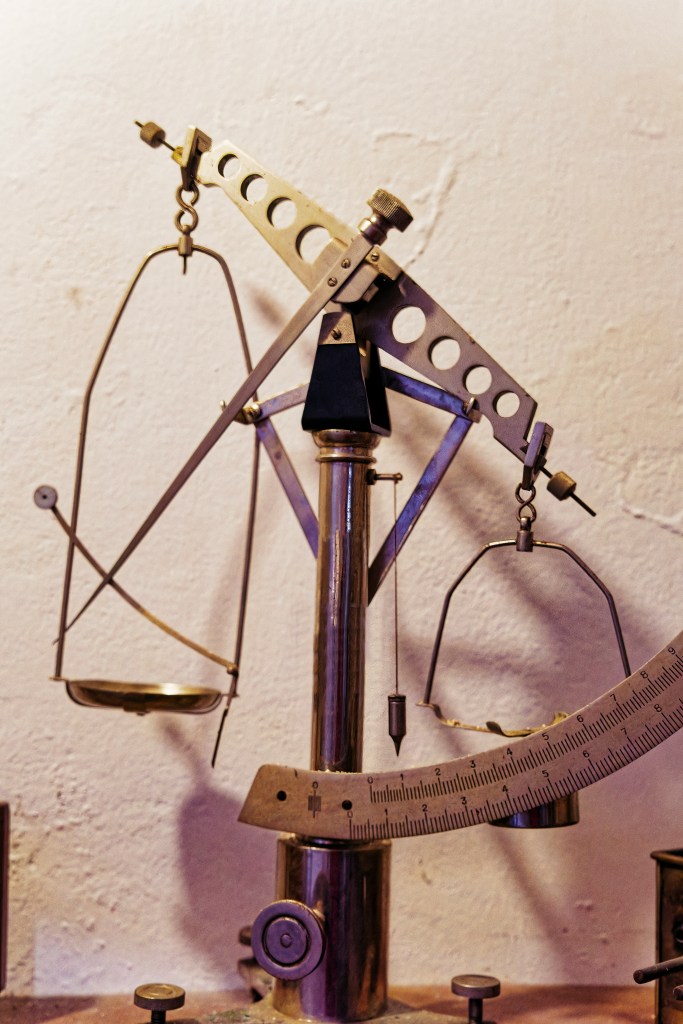
Pain, unfortunately, cannot be measured by a ruler, a scale, or another device. It does not have length, height, weight, or color. It cannot be seen on an x-ray, MRI, or other imaging device. While the cause for pain can usually be determined by identifying injuries or inflammation within the area where a patient is reporting pain, it is ultimately up to the patient to describe their pain as accurately as possible for a provider to understand, decipher, diagnose, and then treat effectively. Deborah Padfield and Joanna Zakrzewska argue in Encountering Pain: Images as a Collaborative Tool for Approaches to Pain Medicine2:
“With limited verbal language available to describe pain3 and many metaphors overused and focusing on notions of injury4 or the dysfunctional body,5 it is hard to cross the divide between the person living with and the person witnessing/treating pain. It is challenging to unearth meanings which are hidden deep in the body and the psyche… This is exacerbated in contexts where verbal language or cultural pain conceptions of clinician and patient are different, and/or where there are competing agendas and imperatives ‘… the interpretation of pain behaviours is heavily dependent on the social and cultural learnings and understandings of both the person in pain and the observer.’6”
Padfield and Zakrzewska performed a decades-long study to help find solutions to how patients with chronic pain can better communicate pain to their providers. They found that “images can support assessment and communication, reimagining and opening spaces where patients can lead the exploration and interpretation of their experience in the safe presence of an informed ‘other.’ Through such a collaborative dialogic process, they can discover a way forward while retaining ownership of their illness experience.”
This proposal to use photos or other imagery to describe pain has never been suggested to me by a provider before, but I am always trying to think of new images to share with my providers because they cannot see or feel what I’m describing. Since we cannot measure pain with a tool and provide doctors with actual data, I welcome the creative efforts of researchers like Padfield and Zakrzewska to reimagine pain communication. When I look at the traditional 0-10 pain scale, it may mean something entirely different to me than it does to another patient if our tolerance for pain is different. How can providers accurately assess the severity or risk to a patient with different interpretations of this scale?
One of the images used in Padfield and Zakrzewska’s study that resonates the most with me is a woman staring at the camera but silenced by a clamp snapping down on her lips. This image emphasizes the inability of pain sufferers to talk about their pain while they are experiencing it. We often feel unintentionally silenced in public or social settings because it is awkward and uncomfortable to express pain and we don’t want to be labeled as complainers or to ruin the mood. So instead, we sit in silent pain, enduring and waiting for a moment to break free and return home to suffer alone. I commend Padfield and Zakrzewska for trying to provide a new voice to chronic pain patients. As they found in their study, giving voice to pain helps patients feel validated and hopeful that others care. Visualizing and expressing pain in the moment gives the patient the comfort of feeling seen and understood, rather than assuming that we are just shy, uninterested, or unengaged. Instead, we are struggling to find a way to sustain ourselves.
- Jeannie Di Bon. The Connection Between Hypermobility and “Bad Posture.” November 13, 2024. https://jeanniedibon.com. ↩︎
- Padfield, Deboraha,b,*; Zakrzewska, Joanna M.c,d. Encountering pain: images as a tool for collaborative approaches to pain medicine. PAIN 167(6):p 1252-1262, June 2026. | DOI: 10.1097/j.pain.0000000000003973 ↩︎
- Dow CM, Roche PA, Ziebland S. Talk of frustration in the narratives of people with chronic pain. Chronic Illness 2012;8:176–91.Google Scholar; and Sarry E. The body in pain. 1st ed. Oxford: Oxford University Press, 1985. ↩︎
- Biro D. Psychological pain: metaphor or reality? In: Boddice RG, ed. Pain and emotion in modern history. Basingstoke: Palgrave Macmillan, 2014:53–65; and Biro D. The language of pain. 1st ed. New York: W.W. Norton & Company Inc, 2010. ↩︎
- Bourke J. The story of pain: from prayer to painkillers. Oxford: Oxford University Press, 2014. ↩︎
- Whitburn LY, Jones LE, Davey MA, McDonald S. The nature of labour pain: an updated review of the literature. Women Birth 2019;32:28–38. Google Scholar ↩︎
Copyright 2026 David Lister. All Rights Reserved.

