Summary:
Diagnosing the causes of chronic pain can be significantly delayed for patients, sometimes for years. Read about David’s experience at an imaging clinic obtaining a long-awaited diagnosis after almost thirty years of managing pain.
As a nurse glides ahead of me through the clinic, I feel an intense, interior wind drag my left leg down. A deep swell of inflammation restricts the left joint that connects my spine and pelvis with a fierce stiffness that feels like a cinder block stuck to my glute.
The nurse looks back and slows her gait. “How are you today?” She asks.
As I try to lift my left leg to catch up, the cinder block weighs down my hip with a painful burn that forces my gut, ribs, and neck to engage and drag me forward. I breathe deeply, grit my teeth and exhale, “I’m good, thanks. And you?”
“Doing well,” she responds. “The technician will be with you in a few minutes. Take everything off except boxers, socks, and put on this gown.” She points to a flimsy, blue sheet laying on a bench like a used gym towel. I watch as she drifts down the hallway and disappears into a shadow, her gait swift like a ghost.
The bench sits behind a curtain that stops short of my shins. I pull the curtain closed, lean my right arm against the wall to take weight off my left hip, and then turn to rest my back against the wall. I lower my jeans below my waist so that I don’t have to maneuver my hips while sitting. I remove my right leg first by rubbing it upwards against the bench and forcing the jeans’ leg down. The stiffness in my left hip prevents my arms from extending beyond my knees, so I use my right foot to push the left jeans leg so it can fall to the floor. I finally slide down the wall to rest on the bench.
“Ready, sir?” the tech asks from behind the curtain.
“Just a minute. Almost,” I respond, taking another deep breath. I push off the bench with both hands, lean on the wall, and stand up, tilted. As I pull the gown through my arms and sling the curtain open, a surge of pain tugs on my right shoulder like a puppeteer yanking me upwards. “Ok,” I breathe deeply. “Ready to roll.”
At the end of the hallway, the tech leads me into a room with a blue leather chair, wide, wooden armrests, and an IV bag. “Take a seat,” he says, as he turns away to grab a clipboard. I stare and quickly measure the height of the chair to gauge my best approach. Then I lean on the armrests, suck in my gut to absorb the tug of war between right shoulder and neck, twist my hips around, and fall into the seat, the leather cold and sticky against my bare legs.
“Any metal in your body?” He asks.
“You mean other than Motley Crüe?” I respond. He glares down at me, expressionless. “Um, nope, no metal.”
“Pacemaker, piercings?” He continues.
“Um, no thanks. I’m good.”
“Ok,” he sighs. “Let’s get your IV started.” He wraps rubber tubing around my right arm, cinches it quick like a shoestring, sticks me with the needle, and inserts a narrow tube with a white capsule on the end.
“Thanks for the warning,” I grunt. “Slick moves.”
“We’ll use this for the contrast agent later,” he says. Gadolinium, the contrast agent, will create a brighter and clearer image of my tissues from the scanner, in hopes of identifying inflammation in my joints, specifically those sticky sacroiliac (or SI) joints that have weighed down my hip along the journey to the exam room. “This way,” the tech says.
I use the armrests to push up off the chair and limp out the door.
“Ok, stand facing the wall with your arms up and hold still.” I shuffle into a metal detector and try to close the back of my gown with one arm while raising the other.
“Um, no, raise both arms,” the tech says. I reluctantly let the gown go, feel a breeze brush my legs and back, and raise both arms unevenly, my right shoulder restricted by the knot in my neck. No beeps, so the tech leads me to an adjacent room with a platform surrounded by a white, oval capsule that I will rest inside of for the next forty-five minutes.
“What’s in the DJ’s set list for today,” I ask?
“Well, I’ve got Spotify,” the tech responds. “So, I can play Motley Crüe if you want.”
I smile at the reference. “Hmm,” I say. “Maybe on the car ride home, but considering this thing sounds like a jackhammer drill, how about we try Glen Hansard instead?”
“Glen Hansard, it is. Go ahead and jump up here.” He points to the exam table a few inches above my waistline.
“You got an escalator?” I ask. He smirks and shoves a footstool over with his shoe. I lay my arms on the table and push up to raise my right foot high enough to step onto the stool. I lean on the table, but my arms slip out from underneath me as the knot in my neck has weakened my right arm strength. Before my face crashes onto the metal, the tech grabs my armpit and lifts me up. Then he lowers me down on my back, and I settle into my voluntary, MRI paralysis.
***
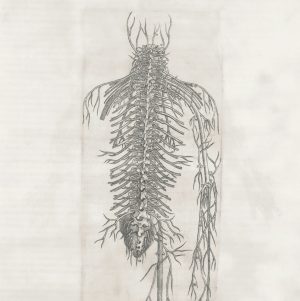
To the naked eye, my hip looks normal. I have no redness or swelling, no bruises or abrasions, just pale white skin. Even with x-rays, nothing appears wrong—no torn muscles, no ripped ligaments, no broken bones. And under a microscope, the lab work shows nothing abnormal, no genetic markers for disease. And yet, my brain continues to send messages daily to trigger severe inflammation that tightens its talons over my SI joints and shoots up my spine. And this MRI is the latest attempt at unraveling the mystery of chronic pain that has ravaged my body for almost thirty years.
Absent a diagnosis, I have struggled most of my life with anxiety, doubt, and shame over the legitimacy of my chronic pain. My medical journey has been riddled with providers that have attempted to treat my symptoms with various strategies. I have roamed from physical therapists to chiropractors, massage therapists to physiatrists, neurologists and psychotherapists, dieticians, acupuncturists, naturopaths, year after year, the results a roulette table of treatments that only provide temporary relief. My diagnosis has been invisible to medical experts for decades, which has left me lost within an overwhelming healthcare system, unsuccessfully navigating it through one failed solution after another.
I meet each day with guaranteed pain in numerous locations throughout my body that change in degree of severity daily. The morning of my MRI scan, I awoke from a three-day slumber of stiffness in my left hip that prevented me from putting weight on my left leg, the pain reaching a level 12 out of 10 for two days straight. When one of my hip joints flares, I also typically get tension and pain on the opposite side of my neck and shoulder to a level 7 or 8 that can rise into my temple and cause a migraine. The migraine causes nausea, and the nausea causes me to miss a day of work or waste a weekend lying in bed on icepacks and heat pads, passed out on muscle relaxers.
This is how I spent my twenties and thirties, lying in bed on muscle relaxers, limping to bus stops for work, snacking on Advil and getting steroid injections in between massage and physical therapy sessions that often left me feeling more exhausted and painful than when I arrived. Before leaving the house to visit friends, go on dates, or go to work, I had to numb my pain with ice, shake off the dizziness from muscle relaxers, and ignore the pain sensors screaming up and down my spine so that I could muster the energy to stand and walk out the door.
I might have built a higher tolerance for pain so that I could endure social outings, but the shame I felt over being in my twenties and debilitated led me to suffer internally rather than share and complain. Ultimately, it led to lower self-esteem and a sensation of invisibility in front of friends and family as I sat stiff in chairs listening to laughter while my brain attempted to restrain jolts of painful electricity surging through my spine.
After approximately twenty years of working with various providers, treatments, and testing, this latest MRI finally diagnosed me with Axial Spondyloarthritis (AS), an autoimmune disease that attacks joints along the spine. The average AS patient takes 7-10 years to diagnose1 due to challenges ranging from demographic biases (historically a disease thought to only affect men, but actually affects women equally), mis-diagnoses (patients dismissed as having anxiety or depression), social stigmas (patients avoid reporting symptoms due to social pressure or shame), and ineffective testing mechanisms (not all people with AS will test positive for the gene marker2). For me, the disease was invisible for 47 years, and my pain remained invisible to family and friends for most of my life. My reluctance to be honest about my chronic pain was primarily due to a fear of judgment because I lacked clear evidence or a cause for my pain. Without a diagnosis, I believed others would conclude my pain was an illusion or not as severe as it felt, especially after learning from many providers how the brain can malfunction and trick our pain sensors into believing something is wrong that does not exist.
For those that live with uncertainty and shame over chronic pain that evades diagnosis, it impacts every aspect of our lives, from school to work, social life to family, from physical to mental to emotional. It is exhausting and frustrating without a visible path to resolution, a sensation that drains the body and mind of motivation and hope daily. Despite the countless medical providers I have worked with throughout my life, it took almost thirty years of living with pain before I was able to obtain a definitive diagnosis. Although I have a lot of work to do to manage the pain from here, this May felt like the right time to finally share my story to help raise awareness for Spondyloarthritis Awareness Month. As I continue to study my own disease and unmask the invisible pain I have dealt with for a lifetime, I look forward to exploring the diverse aspects of the chronic pain community and sharing them through this blog. If you would like to learn more, please consider exploring these Chronic Pain Resources, discover more about Spondyloarthritis at the link above, and follow this blog as I continue to demystify different layers of invisible pain.
Copyright 2026 David Lister. All Rights Reserved.

