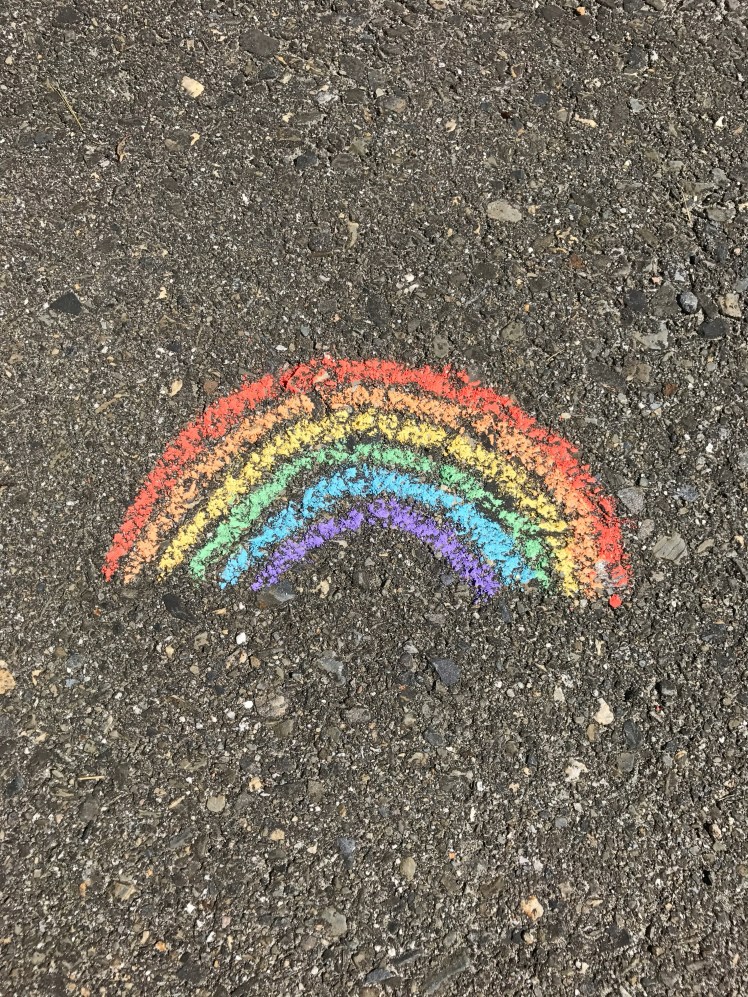
Rainbow Sidewalk Chalk by Alex Jackman on Unsplash
The first Pride parade I attended was in Seattle in the early 2000’s. At the time, I was a Kansas college graduate that traveled across the country to explore creative writing in the grey Cascade mountains of Washington, and to discover an identity buried within me for the first 22 years of my life. As a white, Anglo-Saxon, straight male raised in a Christian home, I grew up within the most privileged demographic group in the history of humankind. While the flamboyance and flare of Pride at first made an ordinary, Midwestern boy like me uncomfortable, I grew accustomed to and admired the confidence of people willing to express their true identities on a grand, public stage for miles and miles, screaming, “This is me and I’m proud!” I admired them because they had a level of confidence and pride that I never had growing up. Instead, as a fatherless son, I developed severe shame, anxiety, and depression that took decades to conquer.
Growing up in Kansas in the 1980’s and 1990’s, I was also ignorant of the LGBTQ+ community because most LGBTQ+ individuals felt it necessary to hide their true selves due to fear of discrimination. So, when I first saw a Pride parade, and met an openly gay person for the first time, I did not know how to respond other than with admiration and reverence. I wanted to own that same level of confidence and understanding that the Pride community brought out in people. Everyone should feel as comfortable as those on Pride floats during the month of June, but unfortunately this is still not the case, especially in our current political environment in America.
And for those with chronic pain, medical research continues to be lacking or absent at the cross-section of chronic pain and the LGBTQ+ community. In a 2024 study in the Journal of Pain1, researchers found that “transgender individuals may be at increased risk for chronic pain development and related mental health disorders.” In general, they “experience higher rates of social stigma and discrimination than their cisgender counterparts, and these factors have been linked to an increased prevalence of chronic pain, depression, and stress.”
Regarding specific chronic conditions, like hypermobile Ehlers-Danlos syndrome (hEDS) and hypermobility spectrum disorder (HSD), data from a health record database spanning 2004–2024 indicated that transgender and gender-diverse individuals demonstrated a significantly higher prevalence of hEDS and HSD than cisgender individuals.2 And yet, very few studies on chronic pain exist that focus on this significant impact to transgender and gender-diverse individuals.
It took me almost thirty years of managing pain before I received a diagnosis for my Spondyloarthritis, and I was in my thirties by the time I received a diagnosis for hEDS. Considering that it took decades to receive a diagnosis for someone who is a member of the most privileged demographic group in society, try to imagine how difficult it must be for LGBTQ+ individuals to navigate our health system with a chronic pain condition when they also must navigate discrimination. And in a political environment in which the U.S. is increasingly terminating medical research, especially for minority groups like LGBTQ+, this may cause even further risk for such populations long-term. In a 2023 study published in the online journal PAIN:
“Americans who self-identify as bisexual or “something else” have the highest general chronic pain prevalence (23.7% and 27.0%, respectively), compared with 21.7% among gay/lesbian and 17.2% straight adults. For pain in 3+ sites, disparities are even larger: Age-adjusted prevalence is over twice as high among adults who self-identify as bisexual or “something else” and 50% higher among gay/lesbian, compared with straight adults.”3
With numbers like these that show LGBTQ+ individuals impacted at higher rates than straight individuals regarding chronic pain, we should be increasing funding for research instead of terminating it. To all my Pride friends out there, don’t hide yourself or your pain. I see you. I recognize you. Happy Pride and cheers to being you.
LGBTQ+ Chronic Pain Support Groups:
- Stocking S, Webb C, Miller G, et al. Understanding risk of chronic pain development and related mental health disparities among transgender people: A review of current literature and future directions. The Journal of Pain, 2024; 37 ↩︎
- Tomasz Tabernacki, Lydia McLachlan, Matthew Loria, Shubham Gupta, et al. Prevalence of Hypermobile Ehlers-Danlos Syndrome in Transgender and Gender Diverse Individuals: A Retrospective Cohort Study. LGBT Health. Sage Publications. 2026-01-01. ↩︎
- Zajacova, Annaa,*; Grol-Prokopczyk, Hannab; Liu, Huic; Reczek, Rind; Nahin, Richard L.e. Chronic pain among U.S. sexual minority adults who identify as gay, lesbian, bisexual, or “something else”. PAIN 164(9):p 1942-1953, September 2023. | DOI: 10.1097/j.pain.0000000000002891 ↩︎
Copyright 2026 David Lister. All Rights Reserved.


One thought on “Invisible Pain: Pride Edition”