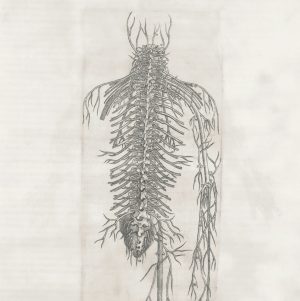

Photo by Illia Panasenko on Unsplash
The Bedtime Routine
9:30 p.m., an hour and a half into the bedtime routine, and my three-year-old daughter asks me, “Are you happy, daddy?” I lie sideways on top of a three-inch thick mat next to her bed that is only long enough to support my head to my knees. My feet and legs sit lower than my waist, the misalignment putting a strain on my lower back. The base of my skull pulsates slow and dull as my vertebrae sink deeper into the toddler-sized pillow. My right arm is compressed into the mat with pain and stiffness that travels from shoulder all the way down into my hand and fingers, and ends with a tingling sensation like spiders crawling underneath my skin.
“Yeah,” I say, “I’m happy.” She smiles and finally closes her eyes.
“Pat my back?” She asks. I extend my arm out sideways, creating a bridge between our backs. With nothing to support my elbow, gravity slowly presses down until my elbow feels like my it might buckle and burst through my skin.
After another fifteen to twenty minutes, I hear a few soft snores, so I grab hold of the side of her bed to pull myself up and stand. Joints and ligaments snap and pop so loudly she stirs. I hold my breath. She doesn’t wake, so I waddle slowly out the door, my spine too stiff to bend.
***
The Spin Disk
After coming home from daycare, my daughter says, “Let’s play for a little bit.” Her mother and I have had a full day of work and want to rest, but after almost eight hours of playing, this toddler is ready for round two. She points to the spin disk, a bowl-shaped toy about two and a half feet in diameter that she can sit inside of as I take her for an only-child merry-go-round spin. Her favorite toy to kickstart the evening, she gets a natural high off the centrifugal force, and it results in a screaming giggle that increases with the speed of the spin. “Look at my haaaaiiirrrr! I’m. So. Happpppyyyyyy…” So I spin and spin and spin.
The spin disk, unfortunately, also results in the most significant pain for my right arm that has nerve damage. My physical therapist recommends not using the arm because rest is the only solution for chronic nerve pain. I can’t avoid using it entirely, however, since I’m right-handed, so the issue has lingered for three to four years. I’ve become relatively ambidextrous with small tasks like using a left-handed mouse, but I have not yet mastered spinning my kid in the disk with my left hand. So, I tend to sacrifice comfort in exchange for screaming giggles, and then spend the next few days nursing a web of tingling from my elbow through the forearm and into my right hand, finally landing in the right pinky and ring fingers. If my fingers graze a surface, it feels like a funny bone cracking open inside my wrist. And in my forearm, deep stiffness enwraps my muscles like a warm gel, trapping them with a deep ache and restricting their motion. While I can’t see any swelling, my forearm feels like it has doubled in size from inflammation.
“Again! Again!” She cries as the spin comes to an end. I massage my forearm, shake the tingling out of my fingers, and breathe deeply.
“Ok, you cheeky monkey. One more spin. Here. We. Gooooo!”
***
Upside Down Reset
“Daddy, upside down! Upside down!” My daughter runs back and forth and side to side, her energy playful and dizzying. It’s time for the “upside down reset,” a game we play to calm her down by flipping her upside down and watching her hair flop in the mirror. I bend with my knees, grab her around the waist, and lift her into the air with a twirl, but my back immediately seizes into a severe spasm. I feel a sharp pain on the left side of my lower back that forces me to lay her down as I crumple onto the floor.
“No, no, daddy! Upside down! Upside down!” I gasp for air as my muscles squeeze my rib cage and lungs, trying to protect my back from further damage. It feels like most torn muscles I’ve had before. Holding my back steady through the tear prevented me from dropping her, but probably worsened the damage to the muscle, the pain feeling like a butcher carving my ribs with a cleaver.
“I’m sorry, kiddo. I hurt my back.”
“Pleaaaaase, upside down,” she pleads, holding her hands together like a prayer as she towers over me while I lie flat on the floor. I look up at my wife as she walks in to investigate.
“Help, please,” I whine.
***
The Spine Disc
“Uppa, uppa, uppa,” my daughter repeats. Translation: please pick me up, daddy. At the moment, if I bend my waist or pick up anything weighing more than five pounds, my low back cinches up like a rope line on a sailboat quickly shifting directions. The pain feels like the muscles around a disc have seized up to try and stop it from falling out of my spine. I’ve had multiple herniated discs, so I recognize the pain when it happens. When the disc slips out, it’s typically an immediate level 15 out of 10 sharpness that causes my entire spine to seize and makes lifting objects or bending dangerous. At age three, my daughter weighs about thirty pounds.
“Can you hold my hand instead?” I respond. “Daddy’s back hurts, remember?” She looks up at me with a nervous expression as the line of people waiting for the bus grows. She clasps onto my leg. I lay my hand gently on her head, consoling her as much as possible from a restricted position, as I stand stiff as a stick ready to snap.
It has been about three weeks since this latest herniation, the disc improving if I do not lift or bend. The injury occurred while sitting at my desk too long, herniating the disc as soon as I stood up. It typically takes about an hour of sitting in the same position to herniate the disc, and about two to three months to recover.
“Daddy?” My daughter looks up at me apprehensively.
“Yes?”
“Hold my hand?” I reach my left hand down towards hers.
“I can do that.”
***
The Inheritance of Pain
Despite the obvious risk of genetic transference to my daughter, I often worry how my chronic representation of pain will impact her behavior and perception of pain. I am frequently physically limited from normal parental activities, like picking her up when she is scared, or chasing after her on a playground, or playing catch with her at gym class. As a three-year-old, she cannot understand what an autoimmune disease or joint disorder is, or why daddy cannot perform what seem to be simple tasks to her. To help her understand that I am restricted and unable to help, my wife and I say that “Daddy’s back hurts,” regardless of which body part is the problem. She has learned this means I cannot do something that she wants me to do, like pick her up, push her on a swing, or sit upright with her in a chair to watch her favorite cartoon. And while I recognize the necessity of this communication, I worry about the long-term impact it may have on her perception of me and pain.
In a 2015 controlled study of parents with chronic pain, researchers found that “Social learning theory (SLT) is posited to be of particular relevance in the intergenerational transmission of pain. As its name would suggest, the central tenet of SLT is that learning occurs in a social context. Indeed, one’s family is thought to be the most important influence for the development of health and illness-related attitudes, beliefs, and coping responses.”1
As this study suggests, belief systems can shape how people cope, treat, and tolerate pain, so the way we communicate to our children about pain is crucial for their ability to learn how to manage it. Before I started labeling and talking about my chronic pain, I never acknowledged that I might have a belief system about health and illness, even though I developed one at a young age. From a stereotypical male perspective, expressing pain is not acceptable, especially in competitive sports like basketball and soccer, which I played in my youth. “No pain, no gain” was the popular workout expression in the 1980’s and ‘90’s when I played sports, so when I felt a surge of discomfort, I kept it to myself. My belief was that pain is normal, and no one wants to hear me complain because they must be dealing with the same degree of pain that I am.
After decades of adjusting my lifestyle due to my autoimmune disease and joint disorder, including developing a higher tolerance for pain than average, and hiding from shame or guilt over how my pain impacted others, I’ve learned how much healthier it is to communicate, share, and heal openly. Being more honest about pain allows me to be more honest about my frame of mind, how pain influences my relationships and work-life balance, and it encourages me to challenge my providers and do research to learn how to improve my own conditions. Being honest with others has also strengthened my relationships and allows people to understand better where my anxiety, exhaustion, and quiet demeanor often come from. If others understand my physical condition and how it affects my mood and behavior, I find that it encourages grace and patience.
Sharing pain with a three-year-old, however, is more challenging. It is often necessary to share my pain with her so that I do not significantly injure myself, but when I share that my back hurts, I find that my daughter will imitate me and start saying that her back hurts, too, seemingly in solidarity. If she learns from me that daddy cannot spend time with her because of my pain, I fear she will inherit a tragic perception of health and wellness, that she will focus more on avoiding pain than taking action and adventure, and avoid trying new things because she fears it may cause her the same pain she witnesses from me. This has often led me to avoid talking to her about my pain and instead tolerating it through our moments together so she can embrace her singing, dancing, and fun without regret or guilt.
In a 2015 clinical study conducted on parents with chronic pain2, researchers found that:
“Compared to controls, parents with chronic pain endorsed more pain in their adolescents, and were more likely to catastrophize about their adolescent’s pain and respond with protective behaviors. Parent’s own pain interference and the perception of higher pain in their adolescent was associated with increased protective parenting in the chronic pain group.”
Not only do I fear that my daughter will inherit an unhealthy perception and belief system about pain from me, but I often worry about overprotecting her because of my relationship with chronic pain. I catch myself doing this already. When I take her to the playground, I observe other parents with their faces buried in their phones, or chatting together at a picnic bench, while their kids roam and play unattended. While these other kids explore and take risks with injury on their own, I shadow my daughter on every playground structure, and feel anxiety rise from my gut to my temples when she tries something new or risky. When she hurts herself, I console her like an average parent, but I worry whether, like researchers found with some chronic pain parents, I “catastrophize” her pain or provide a. healthy amount of support. If I do catastrophize, the result could be a daughter who grows up less confident and adventurous.
One of the most challenging decisions a chronic pain parent must make each day is whether to a) accept a higher and riskier degree of pain or injury that may linger for days and often weeks; or b) endure the shame and guilt from abandoning my daughter and her happiness at the spin disk or damaging her confidence by teaching her caution over action. I always choose option a) because I suspect the potential damage to her development and confidence if I choose not to play with her after eight hours of separation each day, must be worse for her long-term growth than the lingering pain and discomfort that I have learned to deal with for decades past and will tolerate for decades to come.
As my belief system about health and pain has shifted over time to be more open and honest, though, I am more optimistic that I can help shape a healthier belief system in my daughter than I had as a young man. In The Balancing Act of Parenthood with Chronic Pain, Doctors Jennifer Murphy and Samantha Rafie found in their research that “studies [suggest] there are positive outcomes associated with having a parent with chronic pain including developing independence, developing compassion and empathy, and learning about health and coping.”3 As I grow as a parent, I also continue to learn how to talk about pain in a healthy way. I no longer hold onto that “no pain, no gain,” tough guy mentality that coaches trained me to believe as a boy. I will continue talking to my daughter about pain, but I have learned that it is a balancing act between honesty and clarity, teaching her that while expressing pain is important, understanding your pain and that it does not need to prevent her from moving forward or growing, and taking one step further through the pain is just as important. I already see her compassion towards other kids when they cry, and I hope my honesty about pain continues to guide her to be empathetic and confident in expressing who she is and to own her feelings, whether they may be pain-full or pain-free.
- Wilson AC, Fales JL. Parenting in the context of chronic pain: a controlled study of parents with chronic pain. Clin J Pain. 2015 Aug;31(8):689-98. doi: 10.1097/AJP.0000000000000157. PMID: 25232862; PMCID: PMC4363302. ↩︎
- Wilson AC, Fales JL. Parenting in the context of chronic pain: a controlled study of parents with chronic pain. Clin J Pain. 2015 Aug;31(8):689-98. doi: 10.1097/AJP.0000000000000157. PMID: 25232862; PMCID: PMC4363302. ↩︎
- The Balancing Act of Parenthood with Chronic Pain. Murphy, Jennifer and Rafie, Samantha. September 8, 2021. Psychology Today. https://www.psychologytoday.com/us/blog/ease-pain/202109/the-balancing-act-of-parenthood-with-chronic-pain ↩︎
Copyright 2026 David Lister. All Rights Reserved.

