I awake in bed to a sudden gasp for air. My throat lunges forward to inhale the night for a breath, as if I am bursting through the surface from a deep-water dive, desperate for oxygen.
“David, are you ok?” I have awakened my wife in the next room down the hallway. “Is it a nightmare?” She asks. I take a deep, slow breath in, then a series of coughs out like a sputtering engine.
“You need to see someone,” she says. My chest heaves up and down, trying to regain a breathing rhythm. I have choked myself awake like this every two to three hours each night for almost a year. My wife sleeps in a different room because my snoring and gasps for air have become too loud for her to sleep.
Snoring has been an issue since I was a child. When I was around seven or eight years old, my older brother would wake me up in the middle of the night because he could not sleep over the noise of my carburetor-like breathing. He would poke me in the chest and yell, “breathe through your nose, Dave! Your snoring is too damn loud!” He was so desperate for sleep that he thought he could command me to breathe softer, hoping my lungs would obey my elder.
As I grew older, however, the snoring grew worse. I also became an insomniac in junior high, with issues both falling and staying asleep. Decades later, I fear that I may have caused unknown damage to my health because I was ignorant of the early signs of sleep apnea, a serious condition that causes breathing to stop and start during sleep. The most common type of sleep apnea is obstructive sleep apnea (OSA), which occurs when the muscles in the back of the throat relax and then narrow or close your airway as you breathe in. If you are unable to get enough air, it lowers the oxygen level in your blood, and your brain wakes you up and directs you to snort, choke, or gasp to start breathing again. This can occur up to thirty times or more each hour as you sleep, affecting your ability to reach a deep, restful sleep, thus resulting in insomnia and fatigue. It can also cause heart issues because sudden drops in blood oxygen levels that occur when breathing stops cause increased blood pressure and strain on the cardiovascular system.1
A hypermobile Ehlers Danlos Syndrome (hEDS) patient like me is also at a higher risk of developing sleep apnea due to my hypermobile joints and ligaments. Hypermobility can cause throat muscles and the tongue to relax too much and potentially block the airway. Since I now know that I was born with hEDS, and I’ve been snoring and having trouble sleeping since childhood, it heightens my concern for the potential long-term consequences from OSA that may have started when I was a child.
“It’s getting worse,” my wife tells me. “It’s not just the snoring anymore. It sounds like you’re choking.”
“Yeah.” I sigh in agreement. “I can tell it’s worse, too. I feel like I’m suffocating sometimes. I’ll schedule a sleep study.”
Almost a year ago when our daughter was two and a half years old, she did a sleep study to determine the cause of her difficulty both falling and staying asleep. It was a frightening experience for a two-year-old. A masked stranger in a medical gown wheeled a multi-wired cart into our dimly lit clinic room and towards her as she sat on my lap. She tightened her grip around my waist and screamed, “no, no, no! I don’t want it. I don’t want to!” We tried calming her by acting excited by the rainbow of colored wires that would add flare to her pajamas, but as the technician rolled the cart closer, our frightened toddler climbed my shoulders and neck, attempting to escape.
I had to restrain her arms in my lap as she struggled against the technician, who spent almost twenty minutes attaching twenty to thirty wires to our daughter’s chest, back, arms, and head, and then wrapped her face like a mummy to keep the wires in place and plugged in while she slept. Our daughter has a strong will, and to prevent her from ripping the wires out, the technician also had to put her hands in restrictive, fingerless gloves that looked like a strait jacket for hands, which caused even more anxiety-driven screaming and flailing. We finally calmed her down after the technician left by watching one of her favorite movies, Shrek, but she awoke two to three times in the night screaming in fear because of being restrained by wires, wrapping, and gloves. It felt like we were torturing her, watching a scene out of a child’s version of One Flew Over the Cuckoo’s Nest. For a two-year-old, there is no logical explanation for such a strange event. Instead, we suffered a night full of trauma that ultimately determined she did not have sleep apnea or any other disorders, just an iron deficiency and potentially a “night owl syndrome”. I was relieved, however, that we had ruled out sleep apnea for her, which I now hope is a clue that I did not pass my hEDS condition onto her.
***
After about three more months of suffocating in my sleep, I finally obtained an appointment to see a sleep specialist. As I sat in the patient room waiting for the doctor, a group of pale, Styrofoam mannequin heads modelling different CPAP masks stared at me as if they held my inevitable fate. No tests, no data, no diagnosis yet, but masks staring me down with vacant, ghostly eyes, asking, “Which one of us will you choose to breathe for you?”
“David?” The doctor entered the room. “Nice to meet you. So, what brings you in today?”
I pull my eyes away from the masks and smile at the doctor. “Well,” I say. “I’m not sleeping very well.”
After explaining my background with years of snoring since childhood, gasping for air at night the past year, daily fatigue despite how many hours of sleep I get, and my wife’s struggle to sleep because of my symptoms, the doctor first recommended an at-home sleep test. The at-home test was much less invasive and traumatizing than what my daughter experienced. I only had to attach one sensor to my throat with a wire that stretched down to my wrist and into a finger case that captured my oxygen levels throughout the night. If my symptoms were bad enough, this simple and convenient test at home could detect it without a full study. As suspected, the data showed that I did indeed have sleep apnea, and no mummy test would be required. The results indicated that my breathing stopped almost eight times per hour throughout the night, a sobering number when contemplating the body’s reliance upon oxygen for survival. Luckily, according to the Apnea-hypopnea index (AHI) created by the American Academy of Sleep Medicine, I currently fall within the mild level of severity for sleep apnea (less than 15 apnea events per hour during sleep).2 Moderate cases range from 15-30 apnea events per hour, and severe cases include 30 or more events per hour each night.
Despite being a mild case, my doctor recommended starting continuous positive airway pressure (CPAP) treatment at night, especially because OSA can continue to worsen as I get older. “CPAP therapy is one of the most common treatments for obstructive sleep apnea and works by delivering a steady stream of pressurized air through a mask to keep the airway open during sleep. By preventing airway collapse and breathing interruptions, CPAP can improve sleep quality and reduce symptoms like snoring and daytime fatigue.”3
For hEDS patients like me, OSA is a very common comorbidity4. According to a recent study on the cross-section of hEDS and sleep apnea, “hypermobile patients are six (6) times more likely to develop obstructive sleep apnea (OSA)… This elevated risk is thought to arise from the connective tissue abnormalities that characterize hEDS. Defective collagen synthesis and connective tissue fragility may increase laxity in [hEDS patients’] pharyngeal walls, soft palate, and laryngeal structures… Together, tissue laxity and skeletal abnormalities reduces upper airway support, making it prone to collapse during sleep when muscle tone decreases.”5
Although I’ve had hEDS my whole life, I was not diagnosed until my thirties and had never heard of sleep apnea as a potential comorbidity until recently. It has been a long process of performing my own research, consulting with different providers about sleepiness and fatigue, and ironically, a former rheumatologist’s dismissiveness of my chronic fatigue and telling me to talk to a sleep specialist, that ultimately led me to this discovery.
Knowing what I do now about the consequences of sleep apnea, I wish I had been aware sooner and that a doctor had recommended testing for it when I was a child. The associated risks can be severe and life threatening over time. It can cause cardiovascular harm because the heart does not receive enough oxygen during sleep, so it works harder to pump blood. The brain also does not get its normal rest or repair at night because it is instead working to compensate for low oxygen flow by telling the lungs to send more air, and trying other ways keep air passages open. I don’t know yet what potential damage I might have done waiting until my late forties for a diagnosis and to start CPAP, but I will be discussing this with my sleep doctor over the coming months to learn more and hope to limit further damage from now on. The process to obtain my diagnosis, however, has highlighted further gaps in our healthcare system, including inadequate care coordination between specialists and primary care to help identify serious issues like this before they cause significant harm to patients. It is too complex to resolve in one blog post, but a common issue among a lot of gaps in my care and other patients that I converse with, includes delayed diagnoses that perhaps could have been identified earlier if providers recognized comorbidities for chronic conditions. I have often had to educate my own providers about comorbidities related to my own conditions, often due to my own research or after spiraling down a rabbit hole of referrals from one specialist to the next. Coordination of care between specialists and the sharing of knowledge among them is a challenging problem that I do not have an answer for, but I find myself acting as my own care coordinator far too often in a healthcare space that spends trillions of dollars a year.
Coming up next in the comorbidity series, I’ll dive into the details of getting fit for a CPAP mask surrounded by a roomful of breathless strangers, and the three-hour training on how to use a CPAP machine.
Copyright 2026 David Lister. All Rights Reserved.
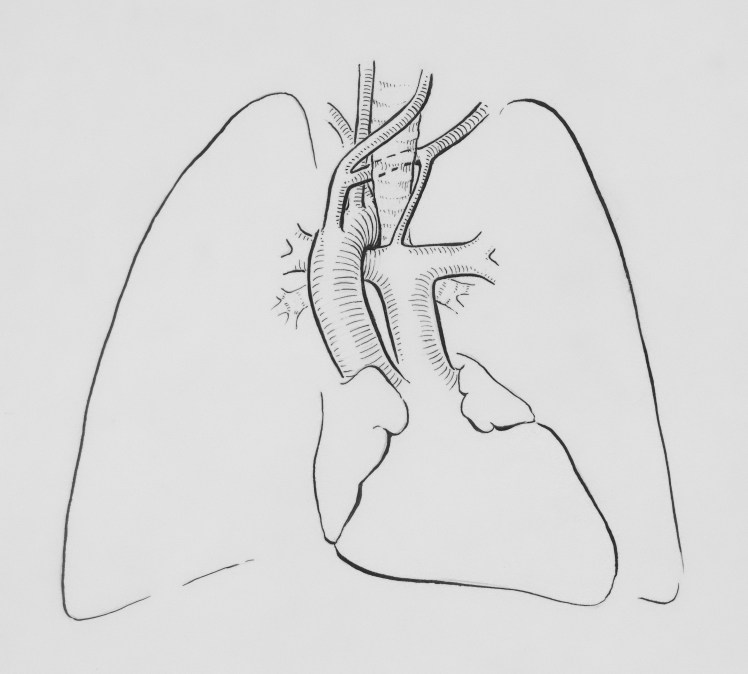
Image Credit: Circulatory system of the heart and lungs. Creator: Wetselaar-Whittaker, J Date: 1955-11-05. Providing institution: Universitaire Bibliotheken Leiden Aggregator: Dutch Collections for Europe Providing Country: Netherlands Public Domain Circulatory system of the heart and lungs by Wetselaar-Whittaker, J – Leiden University Libraries, Netherlands – Public Domain. https://www.europeana.eu/item/744/item_3461740.
- Mayo Clinic. Sleep Apnea and Causes. https://www.mayoclinic.org/diseases-conditions/sleep-apnea/symptoms-causes/syc-20377631. December 8, 2025. ↩︎
- The Cleveland Clinic. Apnea-Hypopnea Index (AHI). https://my.clevelandclinic.org/health/articles/apnea-hypopnea-index-ahi. February 1, 2025. ↩︎
- Garnett, Amber. CPAP Therapy. Sleepapnea.org. https://www.sleepapnea.org/cpap/. March 23, 2026. ↩︎
- Comorbidities are medical conditions that coexist alongside a primary diagnosis and affect your health, including your treatment and outlook. (The Cleveland Clinic. Comorbidities. https://my.clevelandclinic.org/health/articles/comorbidities.March, 15, 2024.) ↩︎
- Zhang KL, Wallon R, Laukaitis CM, Davies C. Obstructive sleep apnea and CPAP efficacy in patients with Hypermobile Ehlers-Danlos syndrome and hypermobility spectrum disorder: a case-control study. Sleep Breath. 2026 Jul 8;30(4):212. doi: 10.1007/s11325-026-03763-3. PMID: 42417930; PMCID: PMC13346149. ↩︎

