“Daddy, daddy, I want pineapple, please?” My three-year-old daughter has recently become obsessed with Costco’s fresh pineapple spears soaked in coconut juice. I’m a proud papa when pineapple is the preferred snack, so I gladly grab a new jar from the cabinet and twist the lid to try and open it. Nothing. So, I grasp again and put my whole forearm into the turn this time, but the lid still refuses to budge. Next, I plant my right foot firmly on the floor like a racer ready to leap off the blocks, then give it a full-body, Chubby Checker twist, with wrist, arm, shoulder, back, and hip straining with all my body’s strength to break open this apocalyptic proof pineapple jar… and… nothing.
“Daddy, Daddy! Pineapple pleeeeeease!”
“Yep, I’m on it.” I glance at my wife, who has been admiring my efforts quietly. “You wanna try?” I ask. “I… um, I loosened it for ya.”
“Riiight,” she says, and grabs the jar. She opens the utensil drawer, pulls out a butter knife, and uses the handle to bash dents at equal intervals around the lid. Then she gives it a go and… nothing again. She grabs a hand towel, wraps it around the lid for leverage, then puts her back into it, and twists again without success.
“Good lord,” I sigh.
“Daddy, it’s okay. Take a deeeeep breath.”
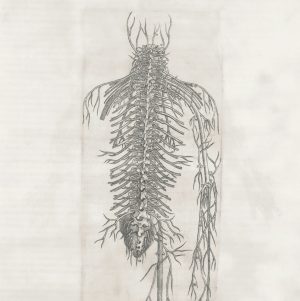
“That’s a great idea,” I respond. I humor the toddler, inhale deeply and hold it, then push from my foot up through my calf and thigh, into my low back, shoulder, and wrist before I release my breath, and the lid finally cracks open. As I hear the satisfying pop of the safety tab, I also hear a parallel pop in the right side of my low back. Pain surges diagonally from my right rib cage to hip, a sharp dagger that I recognize as a muscle tearing in two. The last time something like this happened, I simply picked up my daughter too fast from the floor and shredded the left side of my mid back. Simple, everyday activities like this can often leave me crippled for weeks with a major muscular injury. As a hypermobile EDS person, my ligaments and joints are severely lax, creating instability throughout my spine and limbs that causes high risk for injuries from simple and light activities.
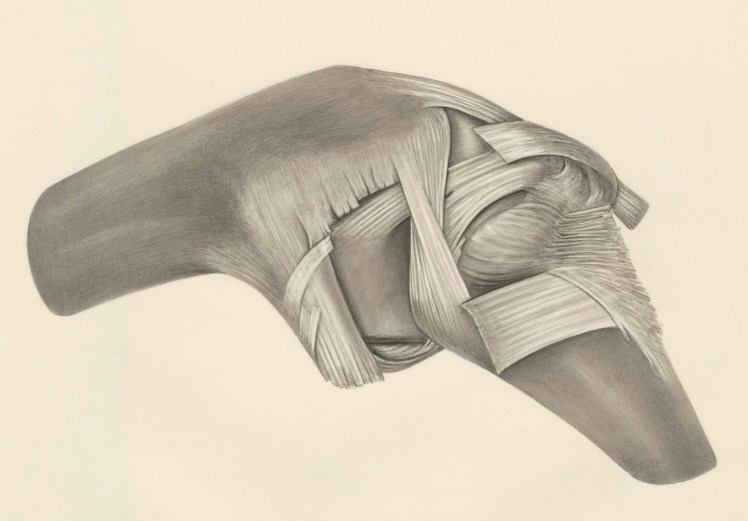
“Ehlers-Danlos syndromes (EDS) … are a group of inherited connective tissue disorders caused by abnormalities in the structure, production, and/or processing of collagen.” Joint hypermobility is a feature common among many EDS subtypes and other heritable connective tissue disorders. Joint hypermobility is defined as the ability of a joint to move “beyond normal limits along physiological axes.”1
When joints constantly move beyond normal limits, the result is joint instability that causes sprains and dislocations from minor movements, tissues that heal slower than normal or less completely, and repetitive strain in joints even from everyday activities. Exhibit A: trying to open a Costco-sized jar of pineapple fruit.
It took only a few seconds of straining my lower back trying to open the pineapple jar before I tore a muscle. As the night progressed, so did the spasm in my back, inflammation growing around the muscle to protect it, with level ten pain messages from my brain warning me of the danger of freshly sealed pineapple jars. There is no cure for EDS, no medication that patients can take to strengthen or stabilize the joints, so the result is living with a low level of confidence in performing everyday activities, or a constant state of cautionary tension.
In my teens and twenties, I lived more boldly than I do now, competing in soccer, basketball, and other activities. EDS was unknown to me then, and I simply thought it normal to experience the multitude of injuries that occurred from sports, like sprained ankles, dislocated fingers, sprained toes, separated shoulders, torn muscles and ligaments, etc. In college, it was so common for me to injure myself that my friends and teammates maintained a running joke that any game we played was unofficial until I injured myself. When I was younger and healed faster, the running joke of my injuries was a source of odd pride, as I gained attention from others, including condolences and thoughtful messages from people who otherwise would not speak to me. As I grew into my thirties, however, the injuries mounting from simple activities like herniating a disc in my back from sitting in a chair for too long, spraining my ankles walking downstairs, or developing severe neck tension and migraines from standing at a concert, then my patience started to slide as freely as my joints.
As I’ve grown into my forties, I’ve dropped the sports and become overall less active, primarily focused on physical therapy to maintain strength in my muscles, which have to operate extra hard to counterbalance the instability of my joints. A common result of joint hypermobility is a body with constant muscle tension from neck to feet. As joints constantly slide around, especially when sitting or standing, the muscles naturally respond with tension to try and keep the spine stable. And chronic muscle tension leads to chronic pain. For me, a standard daily pain baseline is typically between four to five points on a scale of ten. The location and severity of the pain changes depending on which joint or joints are more lax when I wake up. This causes a cascading domino effect of health issues, in which joint instability causes muscle tension, tension causes pain, pain causes fatigue, fatigue causes frustration, and frustration causes anger or depression.
In a recent study in 2025 at an EDS clinic in Toronto, results showed that between 53% and 87% of EDS patients experienced anxiety and/or depression.2 Pain and fatigue clearly lead to depression and anxiety, but “the burden of living with a complex multisystemic condition may be an additional factor, and some qualitative studies have also shown how delays in diagnosis and feeling not believed by medical professionals might contribute[to mental health issues].”3 When pain like EDS patients experience is invisible to others, there is often a challenge of convincing medical providers, friends, and others that the level of pain is real, which can lead to hiding the reality of the patient’s experience. I am often guilty of hiding my pain due to fears of judgment, suspicion of exaggeration or complaining, and then I fail to treat my condition with the care that it needs or deserves. When a simple twist of a fruit jar lid can tear a back muscle so severely that I am in pain, inflammation, and tension for weeks without any visible injury to others, it can be frightening, frustrating, and mentally fatiguing to manage.
As Dr. Rodriguez discusses in her recent research on mental health and EDS, “In addition to screening for mood disorders, [doctors] recommend that clinicians screen for fatigue severity and the presence of pain catastrophizing and educate patients on the symptoms of depression and the interactions between depression and pain, fatigue, and physical function. This can help patients understand the need for depression screening and treatment as components of comprehensive care.”4 While I answer the same questionnaires each time I visit my medical providers, always checking the boxes for anxiety and depression, my providers historically have not discussed mental health with me as it relates to chronic pain. Nor has there been emphasis on educating me as a patient about mental health. I have relied solely on my own research and willingness to make therapy a regular part of my life. There have been several moments in which I have broken down crying with my therapist when discussing an issue related to my chronic pain, primarily because discussing it out loud when I hide it on a daily basis exposes the deep fears and anxieties that I often ignore or that I feel are ignored by medical providers.This only increases my support and understanding of the educational process for mental health that Dr. Rodriguez promotes.
And in our current social climate in which I have witnessed a revival of the traditional stoic behaviors that stigmatize mental health expression and support, I’m more motivated to share stories like this and to promote the de-stigmatization of mental health discussion. So, the next time you or a loved one experiences a Pineapple De-Back-le or similar event, talk about it, laugh about it, and do not shame yourself (or the pineapple).
Copyright 2026 David Lister. All Rights Reserved.
- Kenneth S. Yew, MD, MPH et al. American Family Physician. 2021;103(8):481-492. ↩︎
- Slepian PM, Axenova K, McCarthy M, Siegal R, Gobin K, Weinrib A, Buryk-Iggers S, Santa Mina D, McGillis L, Mittal N, Katz J, Clarke H. Rates of mental health concerns among individuals assessed at the GoodHope Ehlers-Danlos Syndrome Clinic. Orphanet J Rare Dis. 2025 Feb 14;20(1):75. doi: 10.1186/s13023-025-03550-5. PMID: 39953579; PMCID: PMC11829448. ↩︎
- Exploring the Mental Health Burden of Ehlers-Danlos Syndromes. Tori Rodriguez, MA, LPC. Rheumatology Advisor. August 14, 2026. ↩︎
- Exploring the Mental Health Burden of Ehlers-Danlos Syndromes. Tori Rodriguez, MA, LPC. Rheumatology Advisor. August 14, 2026. ↩︎

