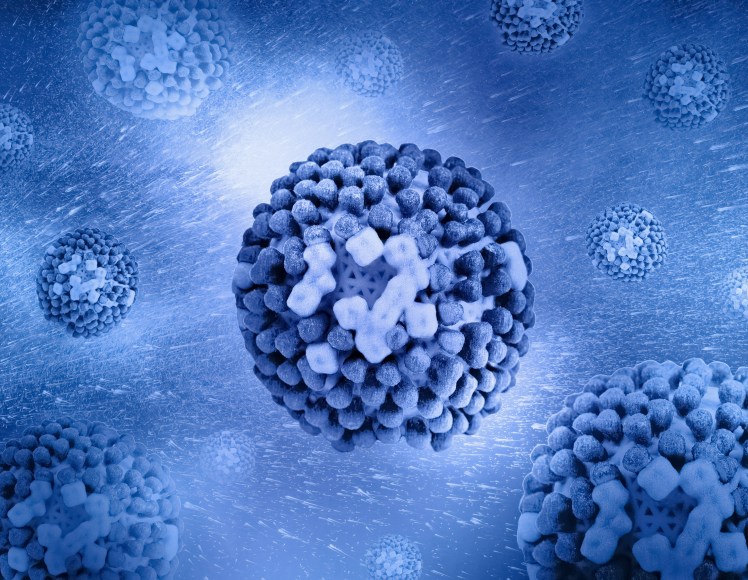
Photo by National Institute of Allergy and Infectious Diseases on Unsplash
“David, open your eyes.” The medic is calm but stern as he tries to speak over my guttural wails and a commotion of sirens, swinging doors, and patient groans. “Can you hear me, David?” I lie on a stretcher in the hallway, pressed up against the wall as doctors and nurses rush by, my contorted limbs thrashing underneath stretcher belts and grasping for air.
“Nurse! Nurse! We need help, please? We were told a room was ready when we called ten minutes ago.” The medic claws at speed-walking nurses as his partner tries to hold my legs down. My lower body spasms uncontrollably as a phantom vice crushes my breath.
“David? Can you tell me where it hurts?” The medic asks.
“It— it—” I struggle to speak even a full word as my gut repeatedly contracts. My body squeezes every muscle from my eyes to ankles, trying to steal a breath from any available pore.
“Not puh—puh— pain.” I spit out between gasps of air. My torso arches up and down, shifts left to right, reaching for air in every direction. “Fuh—fuh—feels like wuh—wind knock out me—uh—uh—uh gain and again.”
“Nurse, we need an IV!” I imagine the hospital full of bandaged heads, bloody legs, and gunshot wounds, or covid victims stuck in isolation, everything worse than my barrier to breathe.
“He’s dangerously dehydrated,” one medic says.
“I know, I know,” his partner replies. “I’m trying.”
A few hours ago, I stumbled into an urgent care clinic, weak, sweaty, and short of breath. I had a fever and was coughing through my mask. They took my name and sent me back outside. “Because of your symptoms, we’ll need you to wait in your car.” So, I slumbered outside and let Iron and Wine soothe me into half consciousness in my car, rain pelting the windows. It took an hour before a phone call woke me up from a slouched driver’s seat. I slumped out of the car without a coat, the rain splashing across my face and helping to revive me.
After over a week of fighting this virus, my symptoms had only worsened. I knew this routine well and needed to get help before it developed into something more severe. The urgent clinic tested me for strep throat, covid, flu, and RSV, but everything came back negative.
“It’s just a basic virus,” the physician’s assistant said. “But for some reason it’s severely dehydrating you, and your body is too weak to fight it alone. You need an IV, but we’re not set up for that here. We’re going to call an ambulance and get you to the ER.” After over three hours of waiting and taking tests, I felt like I might collapse from fatigue.This was my third ER visit for a virus in over two years. When I was a kid, I contracted strep throat two to three times a year and would be out of school for weeks. In my thirties, I was hospitalized for days with a severe case of mono that caused my major organs to swell up with dangerous inflammation. The common cold still makes me sick for three to four weeks and sometimes hangs on for over a month with low grade symptoms and fatigue. Almost guaranteed is a double infection in which congestion lingers long enough that it causes a bacterial sinus infection. The only benefit to this is that I can get an antibiotic to help my immune system fight at least one of the infections.
My typical routine when I get sick includes weeks of symptoms, double infections, and often, if the virus is severe enough, ending up in an ER room with an IV because my immune system is too compromised to defend against the illness by itself. The ER visit usually occurs after a week of infection when my body is depleted from dehydration, and I’m worried because symptoms continue to worsen rather than improve. After the ER IV session, my body is finally able to fight off the worst of the virus. Then the congestion carries on for weeks, and despite my exhaustion from a prolonged internal battle between my immune system and a virus, a bacterium, and itself, I must work at half capacity and with limited focus because I don’t have weeks of sick time. Knowing a lengthy double infection may happen multiple times throughout the cold and flu season, I must salvage as much PTO as possible for a more severe infection.
As I would learn a couple of years later, my immune system does not function properly due to my Spondyloarthritis (SpA), an autoimmune disease that blocks my ability to fight common illnesses because my immune system is distracted into fighting its own tissues that it mistakes as foreign. Autoimmune disorders “arise when the immune system, which normally protects the host from pathogens, mistakenly attacks self-antigens, leading to sustained inflammation and tissue damage.”1 With an autoimmune disease, my immune system spends more time attacking phantom injuries in my joints than attacking real infections. In a study performed in Taiwan and the United States in 2022, researchers found that patients with autoimmune disorders can be a staggering 1.7 to 3 times more likely to contract serious infections than the general population because of malfunctioning immune systems.2
Currently, one of rheumatology’s most popular medications for combatting autoimmunity includes biologics, which are drugs that attempt to turn off the antinuclear antibodies common in autoimmune diseases that attack healthy tissues.3 The biologic drug suppresses the immune system to prevent it from attacking healthy tissues, thus reducing inflammation and pain. One of the biggest risk factors of taking these drugs, however, includes an increased risk of contracting serious infections because an already malfunctioning immune system is further suppressed. According to my rheumatologist, my risk for infection could increase by another 5 to 7 percent higher than the current level of risk for infection discussed earlier, including putting me especially at risk for contracting tuberculosis, hepatitis, and other infections caused by viruses, fungi, and bacteria.
An increased risk of infections from an already compromised immune system that has hospitalized me three times in the past few years does not sound like an appealing solution to chronic pain. I currently take a prescription non-steroidal anti-inflammatory drug (NSAID), which has helped reduce my morning stiffness and pain by almost three to four points, but I still have major flares, and long-term use of NSAIDs has very undesirable potential side effects, such as gastrointestinal bleeding, ulcers, kidney damage, and cardiovascular events like heart attacks and strokes.4 While my doctors regularly monitor my kidney and cardiometabolic functions for issues, if my lab work ends up indicating something is wrong, the solution is simply to stop the NSAIDs, bringing me back to square one with a decision: to biologic or not to biologic.
So, despite the increased risk of infection, and due to the long-term dangers of NSAID use, I recently decided to take my chances with a biologic to determine if the reduction in chronic pain will make the risk of infections worthwhile.
“Wear masks, wash your hands, and after you’re exposed to someone who’s sick, rinse your mouth with antibacterial mouthwash and snort an iodine solution. We learned during covid that both can kill germs really well immediately after exposure.” This is my new rheumatologist, an expert in the field for decades who believes in the latest biologic treatments, but also over-the-counter mouthwash and snorting iodine. I appreciate his creativity.
As we endure the summer heat, I’m currently avoiding severe infections, although I continue to contract summer colds one to two times per season. In the coming weeks, I will work with my rheumatologist to determine the right kind of biologic medicine to start, which will suppress my immune system with the goal of reducing its attacks on my own tissues. It takes about three months to determine whether a biologic is having an impact on a patient’s system, which will bring me into the beginning of fall and the cold and flu season, a great time to test my dysfunctional immune system’s ability to protect me, and my resilience to mask, mouthwash, and snort iodine after someone coughs in my face. Stay tuned in the coming months for insight and commentary on my biologics journey, including research on the biologic medicinal world, challenges of finding the right biologic, the injectable process, and how the immune system responds to a medicine fighting it from fighting itself.
Copyright 2026 David Lister. All Rights Reserved.
- Kumar M, Yip L, Wang F, Marty SE, Fathman CG. Autoimmune disease: genetic susceptibility, environmental triggers, and immune dysregulation. Where can we develop therapies? Front Immunol. 2025 Aug 7;16:1626082. doi: 10.3389/fimmu.2025.1626082. PMID: 40852720; PMCID: PMC12367657. ↩︎
- Huang WN, Chuo CY, Lin CH, Chen YM, Lin WS, Tuckwell K, Jones NS, Galanter J, Lindsay L. Serious Infection Rates Among Patients with Select Autoimmune Conditions: A Claims-Based Retrospective Cohort Study from Taiwan and the USA. Rheumatol Ther. 2023 Apr;10(2):387-404. doi: 10.1007/s40744-022-00525-x. Epub 2022 Dec 26. PMID: 36572758; PMCID: PMC10011274. ↩︎
- A Major Health Crisis: The Alarming Rise of Autoimmune Disease. Molly Murray, CEO of the Autoimmune Association. Guest Blog for the National Health Council. March 28, 2024. https://nationalhealthcouncil.org/blog/a-major-health-crisis-the-alarming-rise-of-autoimmune-disease/ ↩︎
- Davis, A, Robson J. The Dangers of NSAIDs: Look Both Ways. Br J Gen Pract. 2016 Apri; 66(645): 172-3. doi: 10.3399/bjgp16x684433. PMID: 27033477; PMCID: PMC4809680. ↩︎

